Carnation Flowers: The Ultimate Guide to Types, Meanings, Care, Growing, Colors & Uses (2026)
Discover everything about carnation flowers, including their types, colors, meanings, growing tips, care guide, symbolism, and uses in this complete 2026 guide.
Introduction
Carnation flowers are among the most admired flowering plants in the world. With their soft ruffled petals, rich fragrance, vibrant colors, and remarkable longevity, carnations have earned a place in gardens, homes, weddings, celebrations, and floral arrangements across nearly every continent. Their timeless beauty, combined with centuries of cultural significance, makes them one of the most recognizable flowers in the floral industry.
Whether you are a gardening enthusiast, a beginner looking to grow flowers for the first time, or simply someone who appreciates their beauty, carnations offer something for everyone. They are relatively easy to grow, adaptable to different climates, and available in an impressive range of colors, each carrying its own unique symbolism.
Beyond their visual appeal, carnations have played an important role in traditions, religious ceremonies, historical events, and celebrations for more than two thousand years. Today, they remain one of the world’s best-selling cut flowers because they are affordable, durable, and capable of staying fresh in a vase for up to two weeks with proper care.
This complete guide covers every important aspect of carnation flowers, including their history, botanical characteristics, varieties, meanings, cultivation techniques, maintenance, common problems, and practical uses. Whether your goal is to grow healthy carnations in your garden or simply learn more about these remarkable flowers, this guide provides accurate, practical, and easy-to-understand information.
What Are Carnation Flowers?
Carnation flowers belong to the species Dianthus caryophyllus, a flowering perennial plant within the Caryophyllaceae family. The name Dianthus originates from ancient Greek and combines two words meaning “divine” and “flower,” which is why carnations are often referred to as the “Flowers of the Gods.”
Although modern carnations are cultivated worldwide, they are believed to have originated in the Mediterranean region. Over centuries of cultivation, horticulturists have developed hundreds of varieties with different colors, petal shapes, fragrances, and blooming habits.
Carnations are widely recognized for:
- Ruffled or fringed petals
- Long flowering stems
- Sweet, clove-like fragrance
- Long vase life
- Wide range of colors
- Excellent adaptability
These characteristics have made carnations one of the most commercially important flowers in the global floral industry.
Scientific Classification
Understanding the botanical classification of carnations helps gardeners identify their characteristics and growing requirements.
| Classification | Information |
|---|---|
| Kingdom | Plantae |
| Division | Angiosperms |
| Class | Eudicots |
| Order | Caryophyllales |
| Family | Caryophyllaceae |
| Genus | Dianthus |
| Species | Dianthus caryophyllus |
The Dianthus genus contains more than 300 species, but Dianthus caryophyllus is the most widely cultivated for ornamental and commercial purposes.
The History of Carnation Flowers
Carnations have an extraordinary history dating back more than 2,000 years. Ancient Greek and Roman civilizations admired these flowers for their beauty and fragrance. Historical records suggest that carnations were woven into ceremonial garlands, decorative wreaths, and religious offerings.
During the Middle Ages, carnations became popular throughout Europe and were cultivated in monastery gardens for both ornamental and medicinal purposes. By the Renaissance, they had become symbols of nobility, romance, and artistic beauty, frequently appearing in paintings and literature.
Over the centuries, breeders introduced new colors, improved disease resistance, and developed larger blooms. Today, carnations are grown commercially in countries such as Colombia, Spain, the Netherlands, Kenya, and Ecuador, supplying millions of stems annually to the global flower market.
Origin and Native Habitat
The original habitat of carnations is believed to be the Mediterranean basin, where mild temperatures, rocky soils, and abundant sunlight created ideal growing conditions.
Wild carnations naturally thrive in areas that offer:
- Plenty of sunshine
- Moderate temperatures
- Well-drained soil
- Good air circulation
Modern cultivated varieties have adapted to a broader range of climates, making them suitable for gardens across many regions of the world.
Why Carnations Are So Popular Worldwide
Few flowers combine beauty, affordability, versatility, and longevity as successfully as carnations. Their popularity continues to grow because they meet the needs of gardeners, florists, event planners, and flower enthusiasts alike.
Several characteristics contribute to their worldwide appeal:
Exceptional Vase Life
Unlike many cut flowers that wilt after only a few days, carnations can remain fresh for up to two weeks or even longer when properly cared for.
Wide Range of Colors
From classic white and deep red to soft pink, vibrant yellow, rich purple, green, and even specially dyed blue varieties, carnations offer one of the widest color selections among ornamental flowers.
Symbolic Meaning
Each carnation color conveys a different message, making them suitable for birthdays, weddings, anniversaries, graduations, Mother’s Day, sympathy arrangements, and many other occasions.
Easy Maintenance
Compared with many flowering plants, carnations require relatively simple care, making them suitable for both beginners and experienced gardeners.
Commercial Importance
Carnations consistently rank among the world’s most-produced cut flowers because they transport well, have excellent shelf life, and remain attractive for extended periods.
Physical Characteristics of Carnation Flowers
Carnations have several distinctive features that make them instantly recognizable.
Flowers
The flowers are composed of numerous ruffled petals arranged in dense layers. Depending on the variety, blooms may measure between 3 and 8 centimeters in diameter.
Leaves
The leaves are narrow, slender, and grayish-green with a waxy coating that helps reduce moisture loss.
Stem
Strong, upright stems make carnations excellent cut flowers because they support the blooms without bending easily.
Root System
Carnations develop a fibrous root system that benefits from loose, well-drained soil rich in organic matter.
Height
Plant height varies according to the variety:
- Dwarf varieties: 15–30 cm
- Garden varieties: 30–60 cm
- Standard florist varieties: up to 90 cm
Life Cycle of Carnations
Carnations are generally perennial plants, meaning they can return year after year in suitable climates. However, in colder regions they are often grown as annuals or biennials.
Their growth cycle typically includes:
- Seed germination
- Leaf development
- Stem growth
- Bud formation
- Flowering
- Seed production
- Dormancy (in perennial varieties)
Proper maintenance can significantly extend the flowering period and overall lifespan of the plant.
Why Every Garden Should Include Carnations
Carnations are valued not only for their appearance but also for their practical benefits. They attract pollinators such as bees and butterflies, add long-lasting color to flower beds, and provide excellent blooms for cutting gardens.
Their adaptability makes them suitable for a wide range of landscaping styles, from traditional cottage gardens to modern container displays. With the right care, carnations can bloom repeatedly throughout the growing season, offering months of vibrant flowers.
Types of Carnation Flowers
Carnations are not all the same. Although they belong to the Dianthus genus, they are cultivated in several forms to meet different gardening and floral needs. Whether you want elegant cut flowers, colorful garden displays, or compact plants for containers, there is a carnation variety to suit every purpose.
The three main types of carnations are Standard Carnations, Spray Carnations, and Dwarf Carnations. Each has unique characteristics that make it suitable for different applications.
1. Standard Carnations
Standard carnations are the classic florist carnations seen in bouquets and flower arrangements. They produce one large bloom on each sturdy stem, creating an elegant and eye-catching appearance.
Key Features
- One large flower per stem
- Strong, upright stems
- Large flower heads
- Excellent vase life
- Highly fragrant varieties available
- Popular in weddings and floral decorations
Standard carnations are widely grown for the commercial flower industry because they transport well and remain fresh for many days after being cut.
2. Spray Carnations
Spray carnations produce several smaller blooms on a single stem, creating a fuller and more natural appearance.
Benefits
- Multiple flowers on one stem
- Excellent for bouquets
- Long blooming period
- Easy to grow
- Great for garden borders
Because of their branching stems, spray carnations create colorful displays throughout the growing season.
3. Dwarf Carnations
Dwarf carnations are compact plants that rarely exceed 12 inches (30 cm) in height.
These varieties are ideal for:
- Containers
- Hanging baskets
- Window boxes
- Rock gardens
- Balcony gardens
- Small landscapes
Despite their smaller size, dwarf carnations produce abundant flowers and require very little maintenance.
Annual vs. Perennial Carnations
Many gardeners wonder whether carnations return every year.
The answer depends on the variety and your local climate.
Annual Carnations
Annual carnations complete their life cycle within one growing season. They bloom continuously before dying after producing seeds.
Advantages include:
- Quick flowering
- Easy to grow
- Excellent for seasonal color
- Ideal for beginners
Perennial Carnations
Perennial carnations survive for several years under suitable conditions.
Benefits include:
- Return every spring
- Larger plants over time
- More flowers each year
- Cost-effective for long-term gardens
With proper winter protection, perennial carnations can bloom beautifully for many years.
25 Popular Carnation Varieties
Modern plant breeders have developed hundreds of carnation cultivars. Here are some of the most popular varieties grown worldwide.
1. Chabaud Carnation
One of the oldest garden carnations known for its rich fragrance and large double flowers.
Best for:
- Cottage gardens
- Cutting gardens
- Floral arrangements
2. Grenadin Carnation
Produces compact plants with colorful blooms in shades of red, pink, white, and yellow.
Ideal for:
- Borders
- Containers
- Flower beds
3. Giant Carnation
Features extra-large blooms often used by professional florists.
Characteristics:
- Long stems
- Strong fragrance
- Large flower heads
4. Lillipot Carnation
A miniature carnation that performs well in containers and small gardens.
5. Oscar Series
Known for vibrant colors and compact growth, making it popular among home gardeners.
6. Can Can Series
Produces abundant flowers with excellent disease resistance.
7. White Sim Carnation
One of the world’s most famous florist carnations.
Popular for:
- Weddings
- Sympathy flowers
- Elegant bouquets
8. Red Sim Carnation
Highly valued for Valentine’s Day and romantic occasions.
9. Pink Sim Carnation
Symbolizes gratitude and appreciation.
10. Super Trouper Carnation
Produces unusually large blooms with excellent weather resistance.
11. Baby Doll Carnation
Compact plants featuring colorful flowers ideal for containers.
12. Vienna Mix
Offers a beautiful mixture of flower colors within one planting.
13. Sweet William (Dianthus barbatus)
Although technically a different species, it belongs to the Dianthus family and is often grouped with carnations.
14. China Pink (Dianthus chinensis)
A colorful species widely grown in home gardens.
15. Maiden Pink (Dianthus deltoides)
Excellent for ground cover and rock gardens.
16. Devon Cottage Carnation
Highly fragrant traditional English variety.
17. Border Carnation
Specially bred for landscape borders.
18. Malmaison Carnation
Famous for its exceptionally large, fragrant blooms.
19. Picotee Carnation
Recognized by petals with contrasting colored edges.
20. Floristan Carnation
Popular among commercial flower growers.
21. Enfant de Nice
A heritage French variety admired for its fragrance and beauty.
22. Lavender Lace
Produces attractive lavender-colored flowers.
23. Coral Reef
Known for vibrant coral blooms.
24. Crimson King
Deep crimson flowers with excellent garden performance.
25. Rainbow Mix
Produces flowers in multiple vibrant colors from one seed mix.
Carnation Flower Colors and Their Meanings
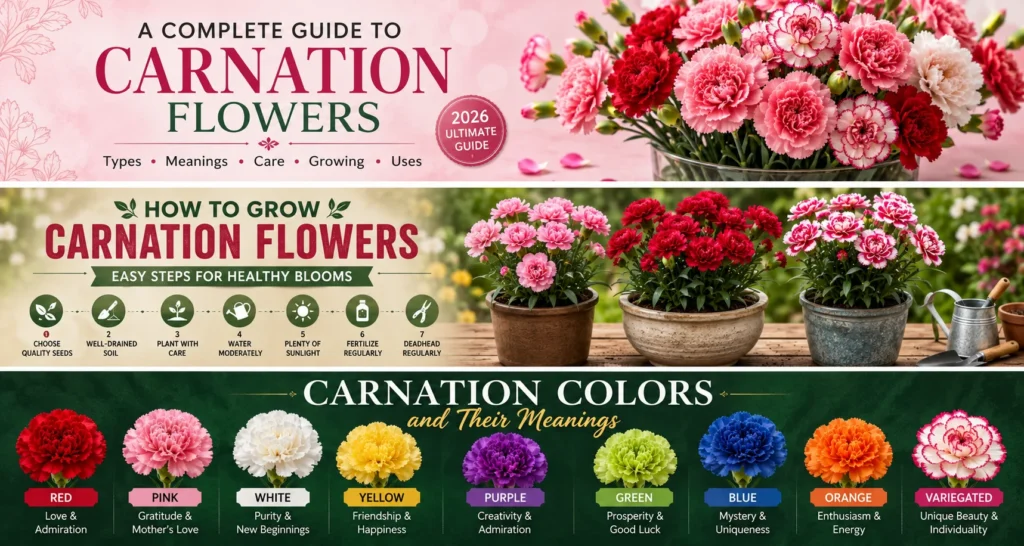
One reason carnations remain so popular is their incredible range of colors. Each color carries its own symbolic meaning, making carnations suitable for different occasions and emotions.
Red Carnations
Red carnations represent:
- Love
- Romance
- Admiration
- Respect
- Deep affection
They are commonly given on Valentine’s Day, anniversaries, and romantic celebrations.
Pink Carnations
Pink carnations symbolize:
- Gratitude
- A mother’s love
- Affection
- Appreciation
- Good wishes
Pink carnations are especially popular on Mother’s Day because they represent unconditional love.
White Carnations
White carnations are associated with:
- Purity
- Innocence
- Peace
- Good luck
- New beginnings
They are frequently used in weddings and religious ceremonies.
Yellow Carnations
Yellow carnations have different meanings depending on culture.
Common interpretations include:
- Friendship
- Joy
- Optimism
- Disappointment (in traditional Victorian symbolism)
Today, they are often used simply as cheerful flowers.
Purple Carnations
Purple carnations symbolize:
- Creativity
- Individuality
- Luxury
- Success
- Admiration
Orange Carnations
Orange flowers represent:
- Excitement
- Enthusiasm
- Warmth
- Positive energy
Green Carnations
Green carnations are relatively uncommon and symbolize:
- Renewal
- Prosperity
- Good fortune
- Health
- Growth
Blue Carnations
Blue carnations do not occur naturally and are usually dyed or genetically influenced.
They symbolize:
- Mystery
- Uniqueness
- Dreams
- Imagination
Black Carnations
Dark burgundy carnations are often called black carnations.
They symbolize:
- Strength
- Elegance
- Mystery
- Farewell
Carnations in Different Cultures
Carnations carry different meanings around the world.
Japan
Carnations are among the most popular Mother’s Day flowers and symbolize gratitude.
United Kingdom
Carnations have long been associated with traditional cottage gardens and formal floral displays.
Spain
They are widely used in festivals, weddings, and cultural celebrations.
United States
The scarlet carnation is the state flower of Ohio and is commonly worn during commemorative events.
January Birth Flower
Carnations are recognized as the official birth flower for January.
People born in January are often associated with qualities represented by carnations, including:
- Loyalty
- Determination
- Love
- Hope
- Strength
- Admiration
Because of this symbolism, carnations make thoughtful birthday gifts for anyone celebrating a January birthday.
Why Florists Love Carnations
Carnations remain one of the top-selling flowers in the floral industry for several reasons:
- Long vase life
- Affordable price
- Wide color selection
- Easy transportation
- Year-round availability
- Pleasant fragrance
- Strong stems
- Excellent for bouquets and arrangements
Their durability makes them a favorite choice for weddings, corporate events, and everyday floral gifts.
Why Growing Carnation Flowers Is Worth It
Carnation flowers are among the easiest flowering plants to grow, making them an excellent choice for beginners and experienced gardeners alike. Their vibrant colors, delightful fragrance, and long-lasting blooms can transform any garden, balcony, or patio into a beautiful outdoor space.
One of the greatest advantages of carnations is their adaptability. They thrive in flower beds, borders, raised gardens, containers, and even indoor pots when provided with proper sunlight and care. Unlike many ornamental flowers, carnations bloom repeatedly throughout the growing season, rewarding gardeners with months of colorful flowers.
Growing carnations at home also allows you to enjoy fresh cut flowers without repeatedly purchasing bouquets. Healthy plants can produce dozens of blooms every season, making them both economical and rewarding.
Choosing the Right Carnation Variety
Before planting, select a variety that matches your gardening goals.
Standard Carnations
These produce one large flower per stem and are ideal for cutting gardens and floral arrangements.
Spray Carnations
Spray carnations develop several flowers on each stem, creating fuller displays that work well in flower beds and bouquets.
Dwarf Carnations
Dwarf varieties are compact and perfect for containers, balconies, patios, and small gardens.
Choosing the right variety helps ensure healthy growth and maximum flowering throughout the season.
Best Climate for Growing Carnations
Carnations perform best in moderate climates with cool nights and warm, sunny days. They are hardy plants but bloom most abundantly when temperatures remain comfortable.
The ideal growing conditions include:
- Daytime temperatures between 60°F and 75°F (15–24°C)
- Cool nighttime temperatures
- Good air circulation
- Low humidity whenever possible
- Protection from prolonged frost and extreme heat
In regions with very hot summers, providing light afternoon shade can prevent flower damage and help plants continue blooming.
Selecting the Perfect Planting Location
The location you choose directly affects the health and flowering performance of your carnations.
Choose a Sunny Area
Carnations need at least 6–8 hours of direct sunlight every day. More sunlight generally produces stronger stems, brighter flowers, and longer blooming periods.
Ensure Good Air Circulation
Proper airflow reduces the risk of fungal diseases such as powdery mildew and stem rot. Avoid overcrowding plants, especially in humid climates.
Avoid Low-Lying Areas
Do not plant carnations where rainwater collects after storms. Standing water can quickly damage the roots and lead to root rot.
Soil Requirements for Healthy Carnations
Healthy soil is the foundation of successful carnation gardening.
Carnations prefer:
- Well-drained soil
- Loose texture
- Rich organic matter
- Slightly alkaline to neutral pH (6.5–7.5)
Heavy clay soil retains too much moisture and can suffocate roots. If your garden has clay soil, improve drainage by adding compost, coarse sand, or other organic materials before planting.
Preparing the Soil Before Planting
Preparing the planting area several weeks in advance gives carnations the best possible start.
Remove Weeds
Clear all weeds and grass from the planting area to reduce competition for nutrients and water.
Add Organic Matter
Mix compost or well-rotted organic material into the soil to improve fertility and drainage.
Loosen the Soil
Dig the soil to a depth of about 10–12 inches (25–30 cm) so roots can spread easily.
Check Drainage
Water the prepared soil and observe how quickly it drains. If water remains for several hours, improve drainage before planting.
Growing Carnations from Seeds
Starting carnations from seed is one of the most affordable ways to grow many plants.
Step 1: Start Seeds Indoors
Begin seeds approximately 8–10 weeks before the last expected frost if you live in a cooler climate.
Step 2: Use Quality Seed-Starting Mix
Fill seed trays with a light, well-draining seed-starting mix.
Step 3: Sow the Seeds
Place the seeds on the surface and cover them lightly with a thin layer of soil.
Step 4: Water Gently
Use a spray bottle or fine watering can to avoid disturbing the seeds.
Step 5: Maintain Warm Temperatures
Keep temperatures between 65°F and 70°F (18–21°C) for successful germination.
Step 6: Provide Plenty of Light
Once seedlings emerge, place them in bright sunlight or under grow lights.
Step 7: Transplant Outdoors
Move young plants outdoors after the danger of frost has passed and the seedlings have developed several true leaves.
Growing Carnations from Cuttings
Propagation by cuttings ensures the new plants remain identical to the parent plant.
Select Healthy Shoots
Choose non-flowering stems from mature plants.
Cut the Stem
Take cuttings approximately 4–6 inches (10–15 cm) long using clean, sharp pruning shears.
Remove Lower Leaves
Strip leaves from the lower half of the cutting.
Plant the Cutting
Insert the cutting into moist propagation mix or coarse sand.
Keep Moist
Maintain consistent moisture without overwatering.
Wait for Root Development
Roots usually develop within three to four weeks under favorable conditions.
Planting Carnations in the Garden
Once seedlings or rooted cuttings are ready, transplant them carefully.
Dig the Planting Hole
The hole should be slightly larger than the root ball.
Space Plants Properly
Leave approximately 8–12 inches (20–30 cm) between plants.
Proper spacing improves air circulation and reduces disease problems.
Water Immediately
Water thoroughly after planting to help settle the soil around the roots.
Growing Carnations in Pots
Container gardening is an excellent option for people with limited space.
Choose containers with:
- Drainage holes
- Good-quality potting mix
- Adequate depth for root development
Terracotta pots are especially useful because they improve airflow around the roots.
Watering Carnation Flowers
Water management is one of the most important aspects of carnation care.
Water Deeply
Deep watering encourages stronger root systems than frequent shallow watering.
Avoid Overwatering
Excess moisture is the leading cause of root rot and fungal diseases.
Water Early in the Morning
Morning watering allows foliage to dry quickly, reducing disease risk.
Fertilizing Carnation Plants
Carnations benefit from regular feeding during the growing season.
Apply a balanced fertilizer every 4–6 weeks while plants are actively growing.
Avoid excessive nitrogen because it encourages leafy growth at the expense of flowers.
Organic fertilizers such as compost, worm castings, and fish emulsion also support healthy growth while improving soil quality.
Mulching Around Carnations
Mulching offers several important benefits.
It helps:
- Retain soil moisture
- Suppress weeds
- Regulate soil temperature
- Reduce soil erosion
Apply a thin layer of organic mulch around plants, keeping it away from the base of the stems to prevent rot.
Supporting Taller Carnation Varieties
Large-flowered carnations sometimes need support, especially in windy locations.
Garden stakes or flower support rings help prevent stems from bending or breaking under the weight of heavy blooms.
Pinching and Pruning
Pinching encourages bushier growth and increases flower production.
Remove the growing tip when young plants reach approximately 6 inches (15 cm) tall.
Regular pruning also removes damaged or diseased stems, improving airflow and overall plant health.
Deadheading Spent Flowers
Removing faded blooms directs the plant’s energy toward producing new flowers instead of seeds.
Use clean scissors or pruning shears to cut flower stems just above a healthy set of leaves.
Deadheading regularly can significantly extend the blooming season.
Common Mistakes When Growing Carnations
Even experienced gardeners sometimes make avoidable mistakes.
Common problems include:
Planting in Heavy Clay Soil
Poor drainage often causes root diseases.
Too Much Water
Constantly wet soil weakens roots and encourages fungal infections.
Too Little Sunlight
Insufficient sunlight results in fewer flowers and weak stems.
Overcrowding Plants
Poor spacing reduces airflow and increases disease pressure.
Excess Fertilizer
Too much nitrogen produces lush leaves but fewer blooms.
Expert Tips for Bigger and Healthier Blooms
Professional growers follow several simple practices to produce exceptional carnations.
- Choose disease-resistant varieties.
- Water deeply but infrequently.
- Feed plants consistently during the growing season.
- Remove faded flowers promptly.
- Keep weeds under control.
- Inspect plants weekly for pests and diseases.
- Rotate planting locations every few years to reduce soil-borne diseases.
By following these techniques, gardeners can enjoy vigorous plants with larger, healthier, and more abundant flowers throughout the season.
FAQs About Carnation Flowers
What are carnation flowers?
Carnation flowers (Dianthus caryophyllus) are flowering plants known for their ruffled petals, sweet fragrance, and long-lasting blooms. Native to the Mediterranean region, they are widely grown in gardens and used in floral arrangements. Carnations come in many colors, each carrying a unique symbolic meaning, making them popular for celebrations, weddings, and special occasions.
What do carnation flowers symbolize?
Carnation flowers symbolize love, admiration, gratitude, purity, remembrance, and good luck. The meaning depends on the flower’s color. Red carnations represent deep love, pink symbolizes gratitude, white stands for purity, yellow often represents friendship, and purple is associated with creativity and admiration.
Are carnations annual or perennial?
Most carnations are perennial plants, meaning they can return and bloom for several years in suitable climates. However, in regions with harsh winters, some gardeners grow them as annuals. Proper care, well-drained soil, and adequate sunlight help perennial carnations thrive year after year.
Where do carnation flowers grow best?
Carnations grow best in locations with full sunlight, well-drained soil, and good air circulation. They prefer moderate temperatures between 15°C and 24°C (60°F–75°F) and slightly alkaline soil. These conditions encourage healthy growth, vibrant blooms, and long flowering seasons.
How much sunlight do carnations need?
Carnations need at least 6 to 8 hours of direct sunlight each day. Full sun promotes stronger stems, brighter flowers, and more abundant blooms. In extremely hot climates, light afternoon shade can help protect the flowers from heat stress.
How often should carnation flowers be watered?
Carnations should be watered when the top inch of soil feels dry. Deep watering once or twice a week is usually enough, depending on the weather. Avoid overwatering because soggy soil can lead to root rot and other fungal diseases.
What is the best soil for carnation flowers?
Carnations grow best in fertile, well-drained soil with a slightly alkaline to neutral pH of 6.5 to 7.5. Adding compost or organic matter improves soil structure, drainage, and nutrient availability, helping plants produce healthier flowers.
Can carnations be grown in pots?
Yes, carnations grow very well in containers. Choose a pot with drainage holes and use a high-quality, well-draining potting mix. Dwarf carnation varieties are especially suitable for balconies, patios, and small spaces.
How long do carnation flowers bloom?
Carnation flowers usually bloom from late spring through summer. With proper care, including deadheading spent flowers and regular fertilization, many varieties continue blooming for several months and may produce additional flowers in early autumn.
How long do cut carnations last?
Freshly cut carnations can last 10 to 21 days in a vase when properly cared for. Trim the stems at an angle, change the water every two days, and keep the flowers away from direct sunlight and ripening fruits to maximize their vase life.
What colors do carnation flowers come in?
Carnation flowers are available in many beautiful colors, including red, pink, white, yellow, orange, purple, green, and blue. Some rare colors, such as blue and green, are created through breeding or dyeing techniques. Each color has its own symbolic meaning.
Are blue carnations natural?
Blue carnations are not naturally occurring flowers. Most blue carnations are produced by dyeing white carnations or through advanced horticultural techniques. They symbolize mystery, uniqueness, imagination, and creativity.
What is the scientific name of the carnation flower?
The scientific name of the carnation flower is Dianthus caryophyllus. It belongs to the Caryophyllaceae family and is one of more than 300 species within the Dianthus genus.
What is the January birth flower?
The carnation is the official birth flower for January. It symbolizes love, admiration, hope, loyalty, and new beginnings. Because of its rich symbolism and beautiful appearance, it is a popular birthday gift for people born in January.
Are carnations safe for cats?
No. Carnations are considered mildly toxic to cats. If a cat chews on the flowers or leaves, it may experience vomiting, diarrhea, drooling, or mild skin irritation. Keeping carnations out of reach of pets is recommended.
Are carnations safe for dogs?
Carnations are also mildly toxic to dogs. While they are not usually life-threatening, eating parts of the plant may cause stomach upset, vomiting, diarrhea, or mild skin irritation. Pet owners should prevent dogs from chewing on carnation plants.
How do you grow carnations from seeds?
To grow carnations from seeds, sow them in a seed-starting mix about 8–10 weeks before the last frost. Keep the soil lightly moist and provide bright light and temperatures between 18°C and 21°C (65°F–70°F). Once seedlings develop several true leaves, transplant them outdoors after the risk of frost has passed.
Why are my carnations not flowering?
Carnations may fail to bloom due to insufficient sunlight, overwatering, poor soil drainage, excessive nitrogen fertilizer, or overcrowding. Providing at least 6 hours of sunlight, balanced fertilization, and regular deadheading encourages healthy flowering.
How do you keep carnations blooming longer?
To extend the blooming season, remove faded flowers regularly, water deeply but infrequently, fertilize every 4–6 weeks, and provide full sunlight with good air circulation. Healthy plants often continue producing flowers for several months.
What pests affect carnation flowers?
Common carnation pests include aphids, spider mites, thrips, slugs, and caterpillars. Regular inspection, proper watering, and using insecticidal soap or neem oil when necessary can help control infestations before they become severe.
What diseases affect carnations?
Carnations can develop diseases such as root rot, fusarium wilt, rust, and powdery mildew. Most problems are prevented by growing plants in well-drained soil, avoiding overwatering, and maintaining good airflow between plants.
Can carnations grow indoors?
Yes, carnations can be grown indoors if they receive plenty of bright sunlight. Place them near a south-facing window or under grow lights, use well-drained potting soil, and avoid excessive watering to keep the plants healthy.
Why are carnations popular in floral arrangements?
Carnations are popular because they are affordable, long-lasting, available in many colors, and have sturdy stems that make them easy to arrange. Their long vase life and symbolic meanings make them a favorite choice for weddings, birthdays, anniversaries, and other celebrations.
Do carnations attract pollinators?
Yes. Carnation flowers attract bees, butterflies, and other beneficial pollinators with their nectar and fragrance. Planting carnations in your garden can help support pollinator populations while adding long-lasting beauty to your landscape.
Can carnations survive winter?
Many perennial carnation varieties can survive mild winters with proper care. Applying mulch around the base of the plants helps protect the roots from freezing temperatures. In colder climates, gardeners often grow carnations as annuals or provide winter protection.